

Digital vs. Offset Printing for Packaging: How to Choose the Right Method
Sep. 07, 2026
Digital printing and offset printing can both produce excellent packaging. The better option depends on the job itself.
For short campaigns, seasonal designs, prototypes, and variable-data packaging, digital printing may offer clear advantages. For stable designs, medium-to-long production runs, demanding color requirements, and cost-sensitive large-volume work, offset printing remains one of the most reliable solutions in the packaging industry.
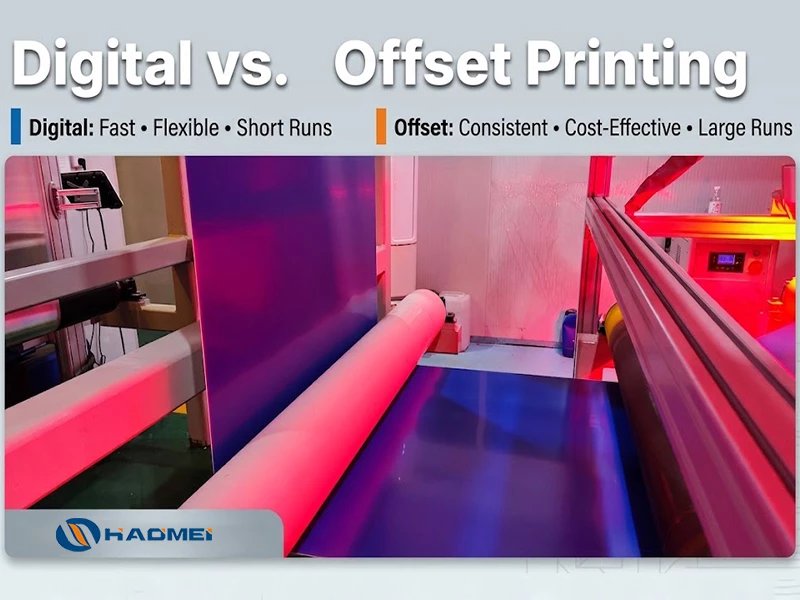
Digital vs. Offset Printing for Packaging: Key Differences
| Factor | Digital Printing | Offset Printing |
| Best for | Short runs, variable content, fast changes | Medium to long runs, repeat orders, stable designs |
| Setup time | Very short | Longer due to plate making and press setup |
| Printing plates | Not required | Required |
| Unit cost at low volumes | Usually competitive | Often higher at very low volumes |
| Unit cost at high volumes | May increase significantly | Usually becomes more cost-effective |
| Variable data | Excellent | Limited and less practical |
| Color consistency | Good, depending on equipment and substrate | Strong control, especially for brand and spot colors |
| Material flexibility | Depends on digital press capability | Broad range with suitable inks and press configuration |
| Finishing integration | Varies by operation | Well suited to conventional packaging finishing |
| Long-run efficiency | Can be limited by click or ink cost | Highly efficient for high-volume work |
What Is Digital Packaging Printing?
Digital printing transfers artwork directly from a digital file to the printed substrate. Unlike conventional offset printing, it does not require printing plates for each color.
Common digital packaging technologies include:
- Digital toner-based printing
- Inkjet printing
- UV inkjet printing
- Water-based inkjet printing
- Digital label and flexible packaging presses
Typical digital packaging applications include:
- Product samples and prototypes
- Limited-edition boxes
- Seasonal promotions
- Event packaging
- Personalized labels
- Regional packaging variations
- Small e-commerce brands
- Test-market product launches
Because no printing plates are needed, digital production can begin quickly after artwork approval. This makes it suitable for short runs, frequent design changes, and personalized packaging.
What Is Offset Printing for Packaging?
Offset printing is a plate-based process. Images are transferred from printing plates to a rubber blanket and then onto the printing substrate.
For packaging production, offset printing is commonly used for folding cartons, corrugated preprint, premium retail boxes, inserts, sleeves, labels, and other paperboard-based packaging applications.
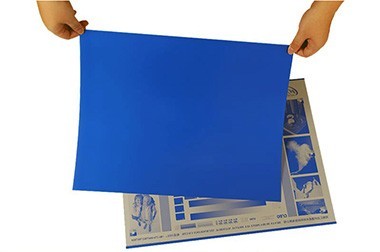
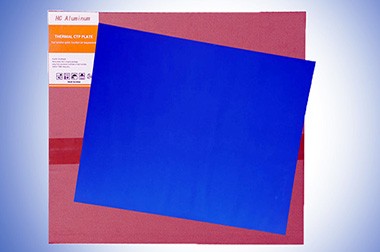
Learn more about Haomei Aluminum’s thermal CTP plate solutions for professional offset printing workflows, including commercial and packaging applications.
A typical offset workflow includes:
- Prepress file preparation
- CTP plate imaging
- Plate processing or processless plate imaging, depending on the system
- Plate mounting on the press
- Color setup and registration
- Production printing
- Finishing, such as coating, laminating, embossing, die-cutting, or foil stamping
Digital vs Offset Packaging: The Real Cost Question
Digital printing often starts with a cost advantage because conventional plate preparation is avoided. Offset printing starts with additional setup, but the economics can improve significantly as the run becomes larger.
Digital Printing
A strong option when order quantities are small, artwork changes often, or multiple versions are required.
Offset Printing
Often more attractive when packaging artwork is stable and the same design is produced repeatedly at larger volumes.
A practical comparison should include:
- Prepress and plate costs
- Make-ready time and waste
- Ink or toner consumption
- Packaging material waste
- Finishing costs
- Labor and turnaround
- Inventory and obsolete packaging
How Color Consistency Affects Packaging Printing
Both digital and offset systems can produce high-quality packaging graphics. The important question is how accurately and consistently the required color needs to be reproduced over production runs.
Offset can be particularly attractive for packaging programs that depend on established color management, repeat production and controlled spot-color workflows.
Haomei supplies thermal CTP plates for offset workflows where reliable imaging and repeatable plate performance are required.
Packaging Materials and Substrate Compatibility
Packaging comes in many forms: coated paper, uncoated board, folding carton, metallized paper, label stock, corrugated board, plastic films, and specialty materials.
Digital press compatibility depends heavily on the equipment and ink system. Some digital presses are optimized for paperboard and labels, while others can print on a broader range of materials with primers, coatings, or specialized curing systems.
Offset printing is well established in paperboard and carton packaging. With the correct press configuration, ink system, blankets, plates, and finishing equipment, offset can support a wide range of packaging materials.
For example, offset printing is commonly selected for:
- Folding cartons
- Cosmetics packaging
- Food and beverage cartons
- Pharmaceutical boxes
- Consumer electronics packaging
- Luxury retail boxes
- Printed inserts and packaging sleeves
When UV inks, long runs, or demanding press conditions are involved, plate selection becomes especially important. Printers should evaluate plate durability, image performance, chemical compatibility, and the specific requirements of their workflow.
How to Choose Between Digital and Offset Printing for Packaging
When Should You Choose Digital Printing for Packaging?
Digital printing is often the better choice when:
- The order quantity is low
- The design changes frequently
- Fast turnaround is critical
- The packaging includes variable data
- A product is being tested in the market
- The campaign is seasonal or limited edition
- Personalization is part of the marketing strategy
- Prototypes are needed before mass production
Digital can help brands react quickly, especially in fast-moving retail and e-commerce environments.
When Should You Choose Offset Printing for Packaging?
Offset printing is often the better choice when:
- Production volumes are medium to high
- Artwork is stable and repeatable
- Color consistency is essential
- The job requires Pantone or specialty colors
- The packaging requires premium finishing
- Unit cost needs to be optimized at scale
- The project uses carton board or conventional packaging substrates
- The customer expects reliable repeat production over time
Offset printing remains a core technology for packaging converters because it combines high productivity, strong print quality, and cost efficiency for larger orders.
Choosing the Right Printing Plate Partner for Offset Packaging
For offset packaging printers, consistent prepress performance starts with selecting printing plates suitable for the press, imaging system, ink conditions, production volume, and application requirements.
Haomei Aluminum Printing Materials Co., Ltd. specializes in PS plates, thermal CTP plates, and related printing plate solutions. With an annual production capacity of 6 million square meters, we serve customers looking for dependable plate materials for professional printing workflows.
When selecting CTP plates for packaging work, consider:
- Compatibility with your CTP imaging system
- Plate sensitivity and imaging performance
- Required run length
- UV ink or conventional ink requirements
- Plate thickness and size availability
- Processing conditions or processless workflow needs
- Storage and handling requirements
- Technical support and stable supply capability
Discuss Your Offset Printing Plate Requirements
Explore Haomei Aluminum’s CTP plate product range or contact our team for technical and commercial support related to PS plates, thermal CTP plates, packaging printing, and offset workflows.
Users viewing this material also viewed the following
FAQ – Digital vs Offset Printing for Packaging
Is digital printing better than offset printing for packaging?
Not necessarily. Digital printing is often better for short runs, multiple designs, prototypes, and variable content, while offset printing can be more economical for larger and repeat production.
Does offset printing require printing plates?
Yes. Conventional offset printing requires printing plates. CTP (Computer-to-Plate) technology images digital artwork directly onto the plate, eliminating the traditional film-based workflow.
What are CTP plates used for?
CTP plates are used in offset printing to connect digital prepress workflows with conventional offset presses. The digital image is transferred directly to the plate before it is mounted on the press.
Does Haomei supply CTP plates for packaging printing?
Yes. Haomei Aluminum supplies thermal CTP plates, processless CTP plates, and PS plates for packaging, commercial printing, publishing, and other offset printing applications.
When is offset printing more cost-effective for packaging?
Offset printing is often more cost-effective when production quantities are medium to high, the artwork is stable, and the same packaging design is produced repeatedly. Although offset involves plate-making and setup costs, the unit cost can decrease as production volume increases.
Why are CTP plates important in offset packaging printing?
CTP plates are an important part of the offset prepress workflow. A suitable plate can support accurate image reproduction, stable dot performance, reliable registration, and consistent printing when used with compatible equipment and proper processing conditions.
Further reading: ctp plates for offset printingctp offset printingctp offset printing platesoffset ctpoffset printing ctp plate