

What is the meaning of CTP plate?
May. 15, 2026
CTP plate is a key consumable in offset printing, widely used for commercial printing, newspaper production, packaging printing and UV applications. Haomei supplies high-performance thermal CTP plates with stable imaging, long press life and global export support.
- Factory Direct
- Free Sample
- OEM Packaging
- Fast Delivery
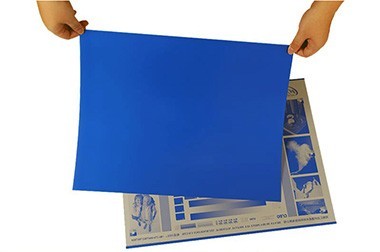
CTP plate (Computer-to-Plate) is a printing plate that is imaged directly from digital files using laser or light sources, without the need for film. This technology has revolutionized the prepress workflow by improving the efficiency, accuracy, and environmental sustainability of offset and other plate-based printing methods.
CTP plate is the product of the Computer-to-Plate process, where digital images are directly imaged onto the printing plate. This modern method eliminates the need for intermediate film production, resulting in higher print quality, shorter turnaround times, reduced chemical usage, and lower overall costs in high-volume, high-precision printing applications.
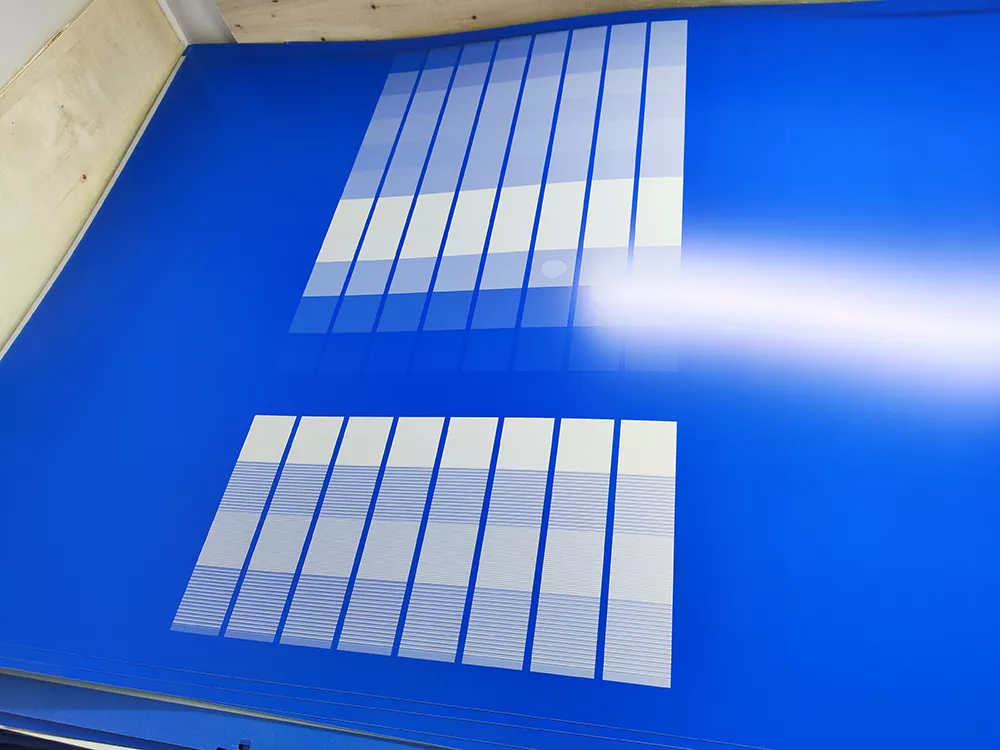
CTP stands for Computer-to-Plate, and CTP plate is the printing plate used in this digital imaging process. Unlike traditional film-based plate-making (such as Computer-to-Film or CTF), the CTP process transfers digital images directly onto the plate, significantly streamlining workflows in modern printing.
Haomei CTP Plate Product Range
-
Thermal Plates
Use infrared laser on a thermal-sensitive coating. Highly durable, ideal for long-run printing.
-
Violet Plates
Exposed using violet laser (405–410 nm). Suitable for short to medium print runs, cost-effective.
-
Process-Free Plates
Do not require chemical processing, reducing environmental impact.
-
Photopolymer Plates
UV-sensitive, commonly used in flexographic printing for packaging and labels.
Different Types of CTP Plates
| Type | CTP Plate Image | Description |
| Thermal CTP Plate |
|
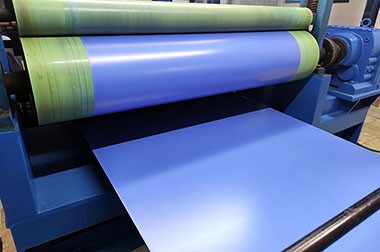
Thermal CTP Plates are sensitive to infrared laser energy. They are known for their high durability and excellent dot reproduction, making them frequently used in high-volume printing environments. Thermal plates come in single-layer and double-layer formats, with double-layer designs providing enhanced print stability and image quality. |
| Violet CTP Plate |
|
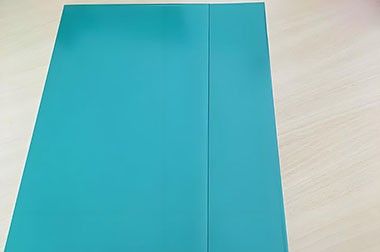
Violet CTP Plates are imaged using violet laser technology. They are generally more cost-effective and environmentally friendly. Although the image resolution may be slightly lower compared to thermal plates, violet plates require fewer chemicals, making them suitable for small to medium-sized printing businesses and cost-sensitive applications. |
| Process-Free CTP Plate |
|
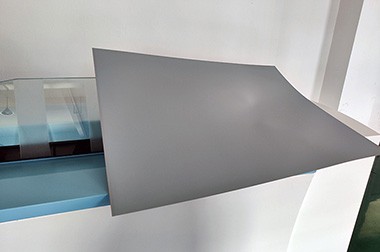
Process-free plates eliminate the chemical development stage. During printing, the non-image areas are removed, reducing waste and operating costs. The image is directly presented on the plate and cleaned by the printing press, minimizing chemical waste and simplifying workflows. This type of plate is ideal for environmentally conscious printing companies seeking simplified production processes. |
| Positive and Negative Working Plates |
|
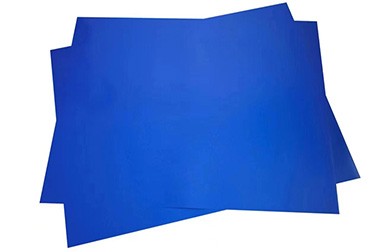
Positive plates dissolve upon exposure, mainly used for UV imaging plates, where exposed areas become blank. Negative plates harden upon exposure, commonly found in thermal plates, where exposed areas form the image. The choice between positive and negative working plates depends on the printing application, imaging method, and printing press compatibility. |
Comparison of Different Types of CTP Plates
| Parameter | Thermal CTP Plate | Photopolymer CTP Plate | Process-Free CTP Plate |
| Laser Type | Infrared Laser (830 nm) | Violet Laser (405 nm) | Infrared/Violet Laser |
| Development Process | Chemical Development (Some Require Baking) | Alkaline Developer | No Development Required |
| Print Run Durability | 100,000+ Impressions | 50,000-80,000 Impressions | 30,000-50,000 Impressions |
| Resolution | 2400-2540 dpi | 2400-3000 dpi | 2400 dpi |
| Environmental Impact | Medium (Requires Chemical Processing) | Medium (Requires Developer) | High (Zero Chemical Emissions) |
| Cost | High (Equipment + Consumables) | Medium | Medium to High (Higher Plate Cost) |
| Application Scenarios | Long Runs, High-Precision Printing | Medium to Short Runs, Fine Graphics | Short Runs, Eco-Friendly Printing |
How to Choose a CTP Plate?
- Choose Thermal CTP for Long Runs: Ideal for high durability and stability (e.g., packaging boxes, textbooks).
- Choose Photopolymer CTP for High-Precision Printing: Best for fine image reproduction (e.g., art books, luxury packaging).
- Choose Process-Free CTP for Eco-Friendly Needs: Suitable for meeting regulations or short-run quick printing (e.g., food labels, corporate brochures).
The selection of CTP plates requires balancing factors like print volume, resolution needs, environmental considerations, and budget constraints. Thermal plates are known for their durability, photopolymer plates excel in high-resolution applications, and process-free plates lead the trend of sustainable printing.
CTP Plate Specifications, Sizes & Custom Options | Haomei Aluminum
| Description | Size | Thickness |
| Process Less Plates | 335mm x 485mm | 0.12mm |
| Procesless Thermal CTP Plate | 510mm x 400mm | 0.15mm |
| Positive Thermal Plates | 650mm x 450mm | 0.15mm |
| Offset Printing Plates | 400mm x 514mm | 0.2mm |
| Offset Printing Plates | 310mm x 514mm | 0.2mm |
| Offset Printing Plates | 388mm x 495mm | 0.2mm |
| Offset Printing Plates | 469mm x 572mm | 0.2mm |
| Offset Printing Plates | 514mm x 388mm | 0.2mm |
| Offset Printing Plates | 308mm x 495mm | 0.2mm |
| Double Coating Layer (positive CTCP plate) | 745mm x 605mm | 0.2mm |
| CTCP Plates | 800mm x 1030mm | 0.28mm |
| CTCP Plates | 800mm x 1030mm | 0.3mm |
| CTCP Plates | 745mm x 605mm | 0.3mm |
| CTCP Plates | 1055 x 811mm | 0.3mm |
| CTCP Plates | 766mm x 605mm | 0.3mm |
| CTP Thermal Double Layer | 785mm x 1030mm | 0.3mm |
| CTP Thermal Double Layer | 790mm x 565mm | 0.3mm |
| CTP Thermal Double Layer | 790mm x 595mm | 0.3mm |
| Procesless Thermal CTP Plate | 650mm x 550mm | 0.3mm |
| UV CTP Plates | 1030mm x 785mm | 0.3mm |
| UV CTP Plates | 1050mm x 795mm | 0.3mm |
| Conventional CTP Plates | 740mm x 605mm | 0.3mm |
| Thermal Offset Plates (positive) | 750mm x 840mm | 0.3mm |
| CTP Plates Thermal Single Layer | 13 3/16" x 19 3/8" | 6ml |
| CTP Plates Thermal Double Layer | 13 3/16" x 19 3/8" | 6ml |
| CTP Plate | 104.5mm x 80.5mm | Customized |
| CTP Plate | 800mm x 600mm | 0.3mm |
| CTP Plate | 910mm x 665mm | 0.3mm |
| CTP Plate | 920mm x 760mm | 0.3mm |
| CTP Plate | 1030mm x 770mm | 0.3mm |
| CTP Plate | 1030mm x 790mm | 0.3mm |
| CTP Plate | 1030mm x 838mm | 0.3mm |
Need Help Choosing the Right CTP Plate?
Tell us your machine & application
Ask Our CTP Plate Engineer
Types of CTP Plate Imaging Systems
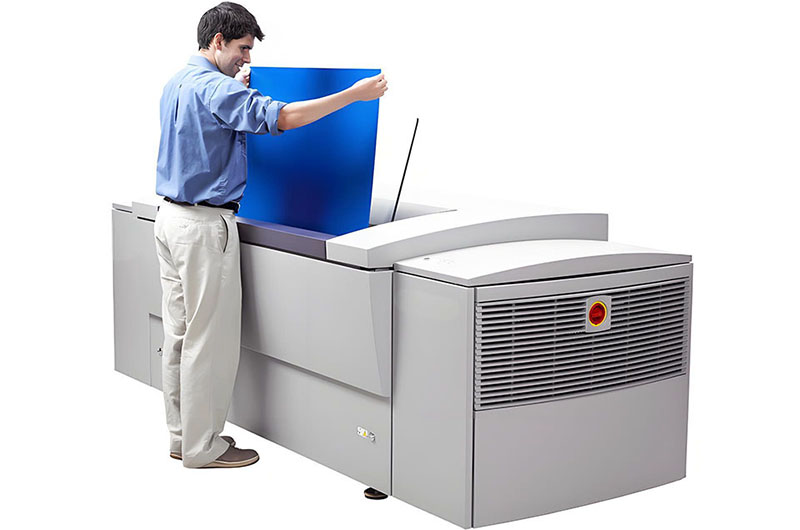
- Internal Drum Platesetter: The plate is mounted inside a rotating drum, and a fixed laser or light source exposes the plate.
- External Drum Platesetter: The plate is wrapped around an external drum, and the imaging head moves along the drum to expose the image.
- Flatbed Platesetter: The plate lays flat, and a laser beam exposes it line by line.
These configurations impact speed, accuracy, and the maximum plate size that can be handled.
Advantages of CTP Plates
- Speed and Efficiency: Eliminates the film step, shortening prepress time.
- Cost Savings: Reduces expenses related to film, chemicals, and labor.
- Quality: Higher resolution, with sharper images and finer details since it avoids film-related degradation.
- Accuracy: Precise registration and dot reproduction, offering higher precision in aligning color separations on the plate.
- Sustainability: Less waste and fewer chemicals compared to CTF (Computer-to-Film).
CTP Plate Working Principle
- Digital Workflow: Digital files (e.g., PDFs) are processed through prepress software to create a rasterized image.
- Imaging: A platesetter (CTP machine) uses lasers (thermal, violet, or UV) to etch the image onto a photosensitive or thermal plate.
- Processing: The exposed plate may undergo chemical development (for conventional plates) or be process-free (for process-free plates).
- Printing: The plate is mounted on the printing press, where ink adheres to the imaged areas and is transferred to paper via rollers.
Direct Digital Imaging with CTP Plate:
In CTP, files from desktop publishing applications are sent directly to a dedicated imaging device (called a platesetter), which exposes the plate material. This bypasses the intermediate film-making step, reducing errors and improving image quality.
Applications of CTP Plates
CTP technology is widely used in newspaper, magazine, commercial, packaging, and label printing. It revolutionizes prepress workflows by reducing steps and enhancing quality and efficiency.
- Commercial Printing: Brochures, magazines, books.
- Packaging: Corrugated boxes, labels, flexible packaging.
- Newspaper: High-speed daily production.
- Industrial Printing: Decorative prints, textiles.
Why Choose Us
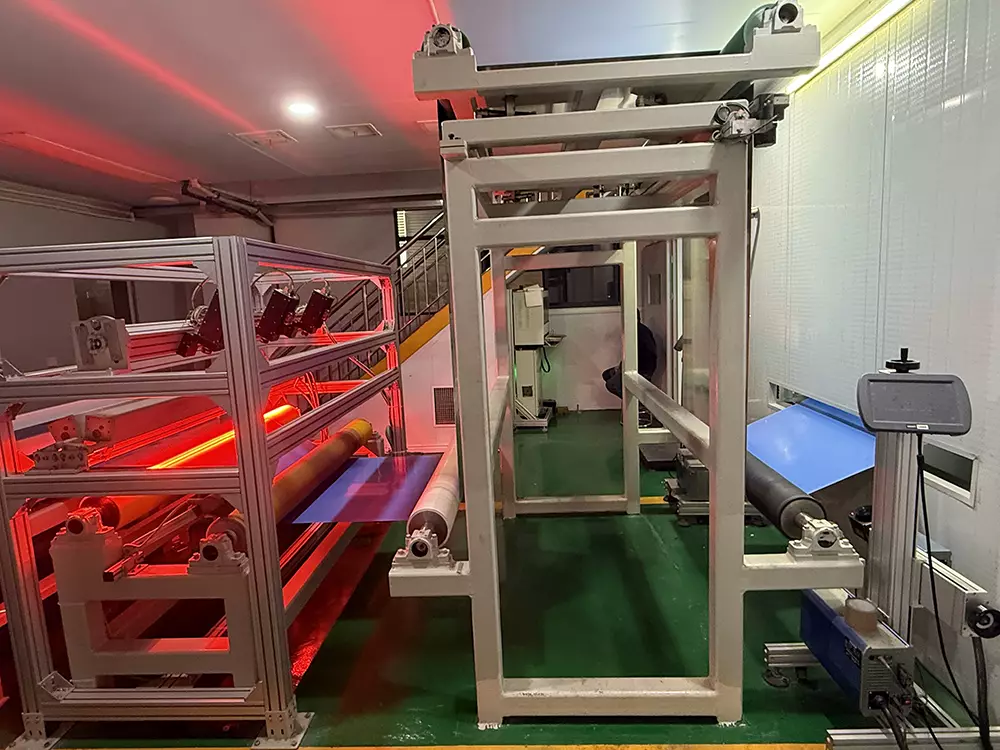
Advanced CTP Plate Manufacturing Facility
High-capacity production lines ensure stable quality and fast delivery for bulk CTP plate orders.
- 25+ years industrial plate production experience
- Export to 100+ countries
- Stable 830nm coating quality
- Strict QC inspection
- OEM packaging available
- Fast global shipment
- High imaging precision
- Long press durability
- Compatible with major CTP systems
- Competitive factory pricing
- Small trial order supported
- Technical support available
Global Export Experience
Exporting CTP Plates to 100+ Countries
Our CTP plates are widely used in Europe, Southeast Asia, the Middle East, and South America.
We have successfully provided CTP plate solutions to the following countries: the United States, the United Kingdom, Canada, Brazil, Mexico, Spain, Greece, Turkey, Israel, Saudi Arabia, the United Arab Emirates, Iran, Kazakhstan, Pakistan, India, Bangladesh, Sri Lanka, Nepal, Vietnam, Laos, the Philippines, South Korea, Jordan, Oman, Algeria, Kenya, Ecuador, Venezuela, Belarus, Malta, and Panama.
Customer Success Cases
Trusted by Printing Companies Worldwide
We supply stable and cost-effective CTP plate solutions for commercial printing, packaging, and newspaper industries.
Considerations for CTP Plates
- Initial Investment: CTP equipment and platesetters are costly.
- Plate Handling: Photosensitive plates require careful storage and handling.
- Technical Expertise: Skilled operators are needed for workflow management and calibration.
Users viewing this material also viewed the following


Further reading: ctp platectp machinectp plate making machinecomputer to plate ctpctp plates for offset printingctp printingctp computerctp computer to platectp computer to plate machinectp machine for printingplate ctpctp printing platectp plate machine